
Menu


Your AI generated this: "Leveraging innovative solutions, we empower organizations to unlock transformative synergies across enterprise ecosystems."
Your brand is: real people, specific examples, no corporate buzzwords.
That's the problem. AI doesn't naturally sound like you. It sounds like every other AI output.
Building a brand-safe workflow means training AI to match your voice and then having a review system that catches anything that slips through.
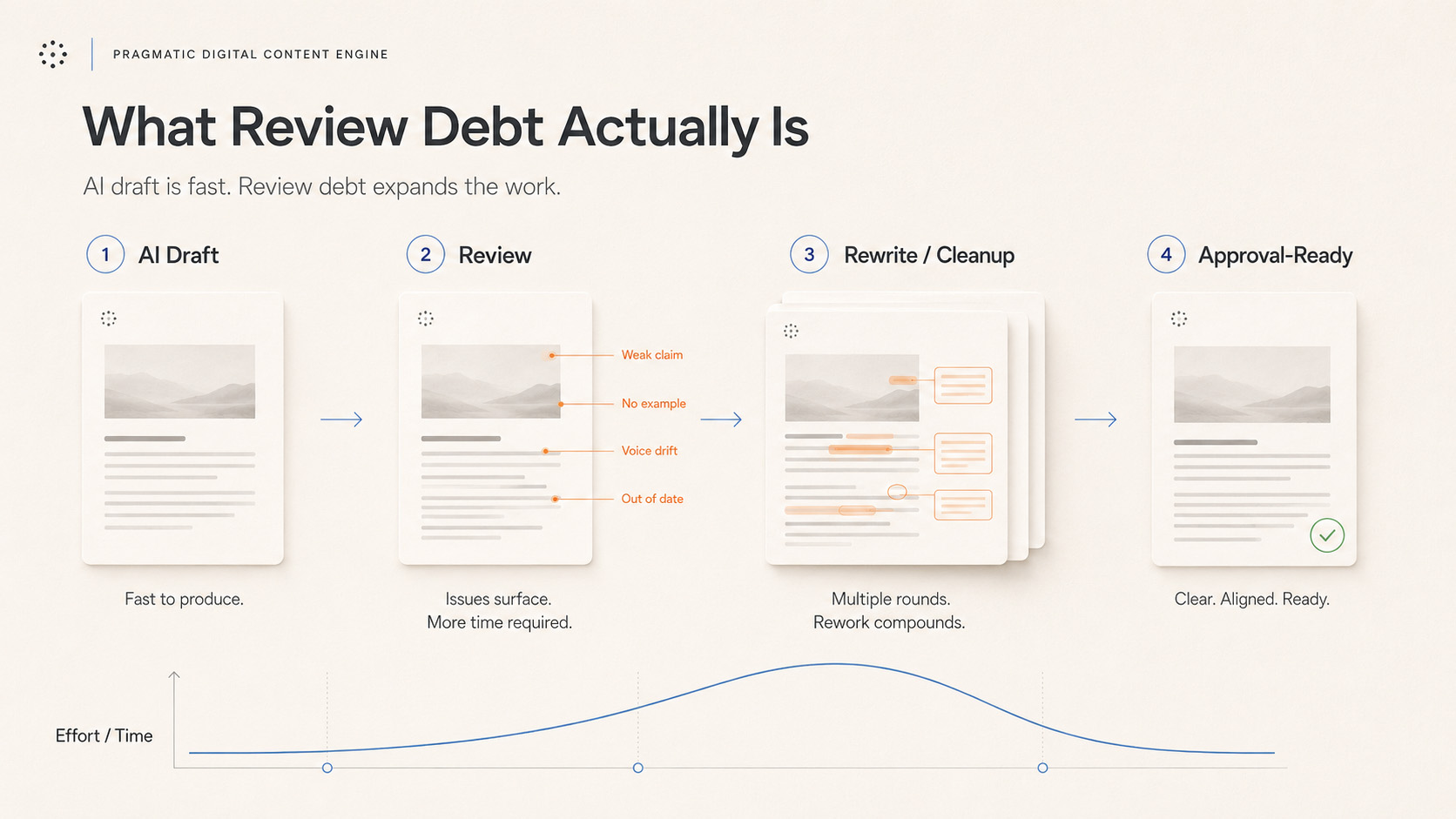
AI doesn't have a voice. It has patterns. And the patterns it learns from are thousands of generic blog posts, corporate copy, marketing content, the average of everything, which sounds like nothing specific.
It doesn't know your voice because your voice is specific. Opinionated. Distinctive.
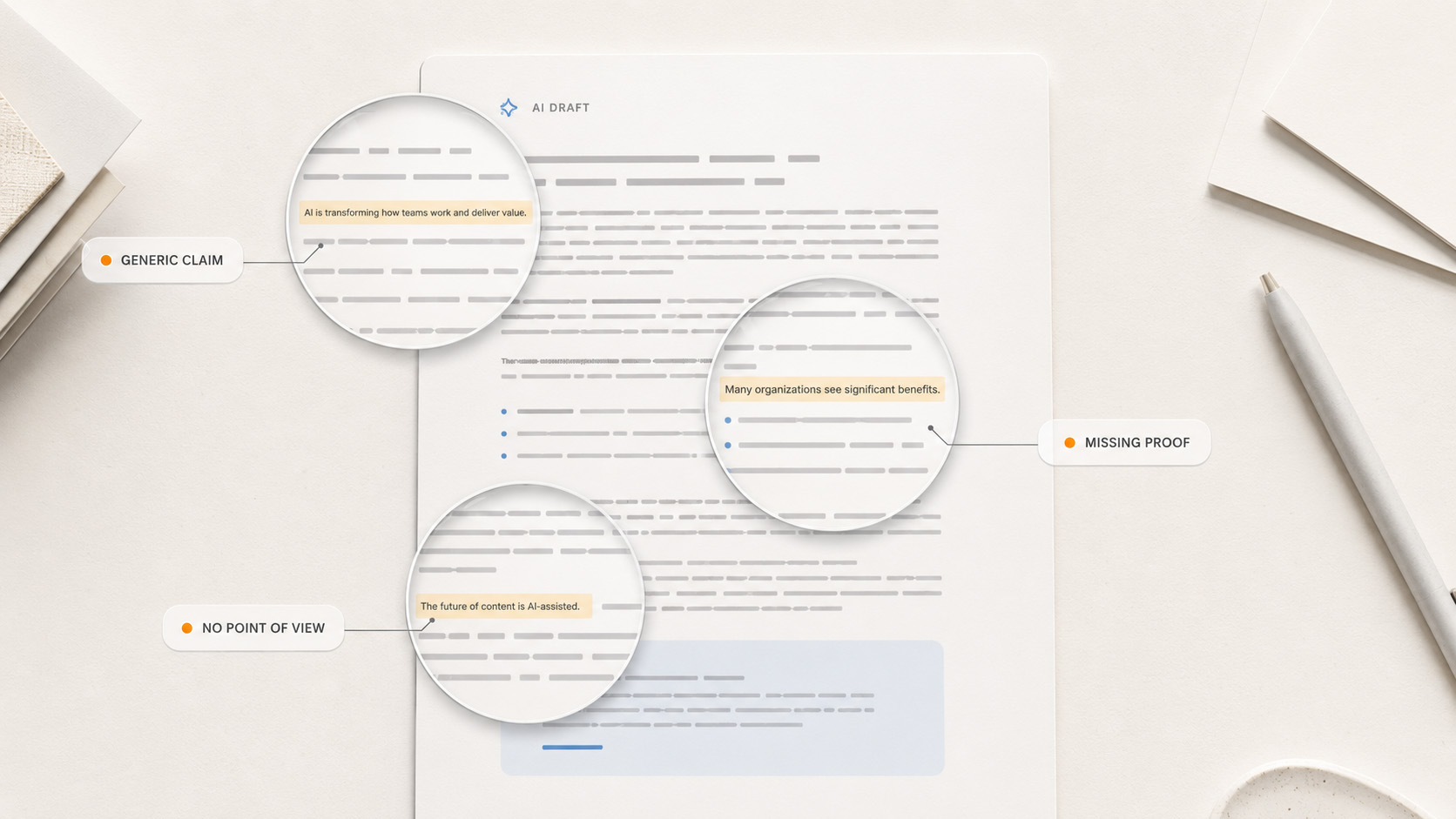
Building a brand-safe workflow means three things: teaching AI your voice through examples and patterns, reviewing systematically so robotic output doesn't slip through, and iterating until the workflow produces genuinely on-brand content.
This is where the AI Content Review Checklist comes in. It's built on 7 writing patterns that make content sound human:
1. Contractions — "don't" not "do not"
2. Short sentences mixed with longer ones — Rhythm matters
3. Specific examples — Not "many teams," but "teams with 10-50 people"
4. Direct language — "This is broken" not "there are challenges to consider"
5. Active voice — "We found" not "It was discovered"
6. Opinions, not fence-sitting — "This is the right approach because..." not "some say...others say..."
7. Natural flow — Sounds like a person talking, not a corporate memo
These aren't advanced. They're just human. Train your AI on these. Review against these. Your output stops sounding robotic.
Knowing the patterns isn't enough. You need to review against them.
Before any piece of content publishes, ask: Does it use contractions naturally? Does it have sentence rhythm (short + long)? Are the examples specific to our audience? Is the language direct or evasive? Is it active voice? Does it take a stance or hedge? Does it flow like a person wrote it?
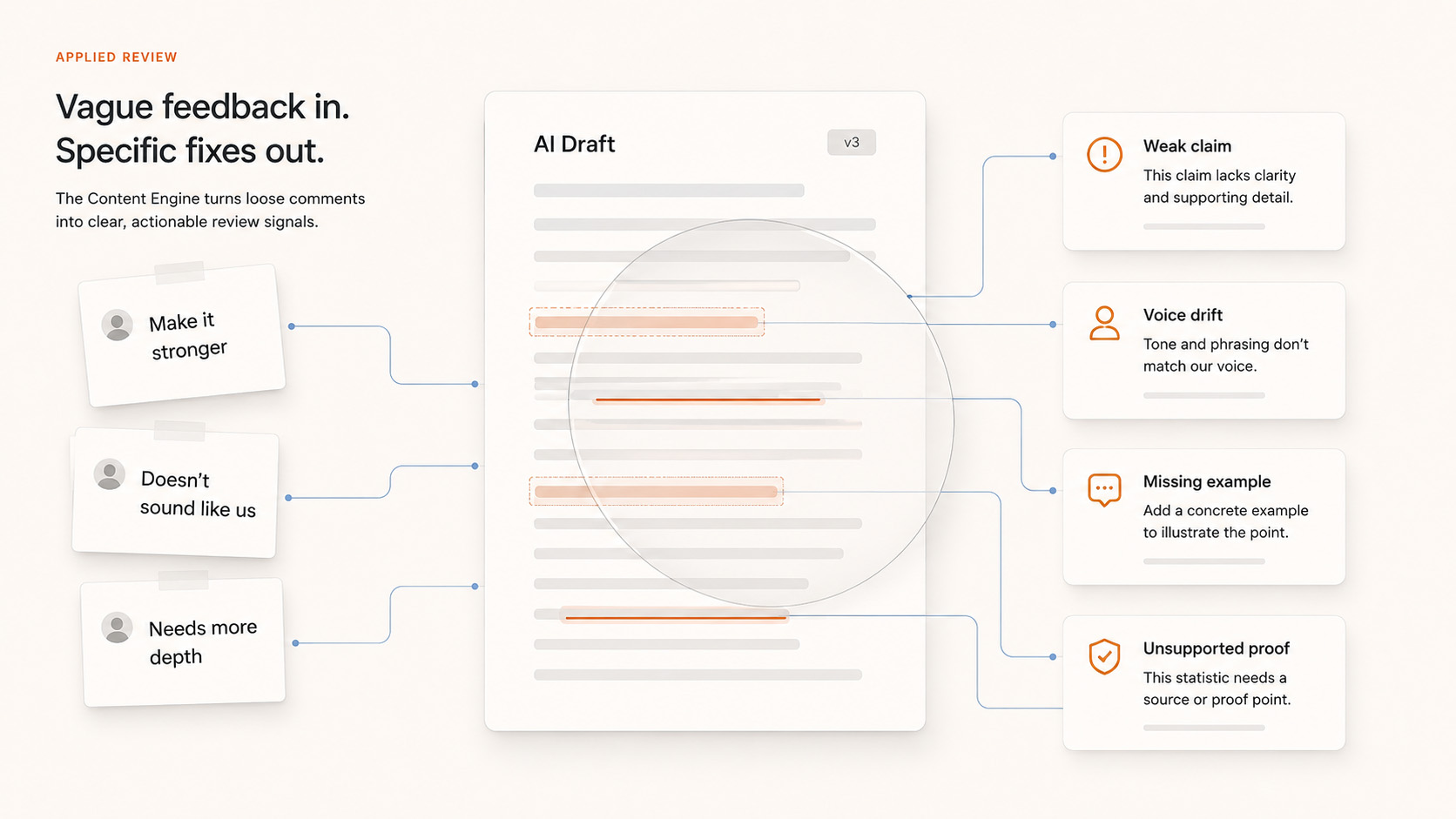
If it fails more than 2 of these, it goes back for revision.
When you review consistently against these patterns, your AI output improves dramatically. And you catch robotic content before it goes public.
Month 1: You're catching robotic output. Revision rate is 30-40%.
Month 2: You're retraining based on patterns. Your AI prompt improves. Revision rate drops to 15-20%.
Month 3+: Your AI "learns" your voice. Revision rate stays low. Output is consistently on-brand.
But only if you're reviewing systematically. One-off reviews don't create this improvement.
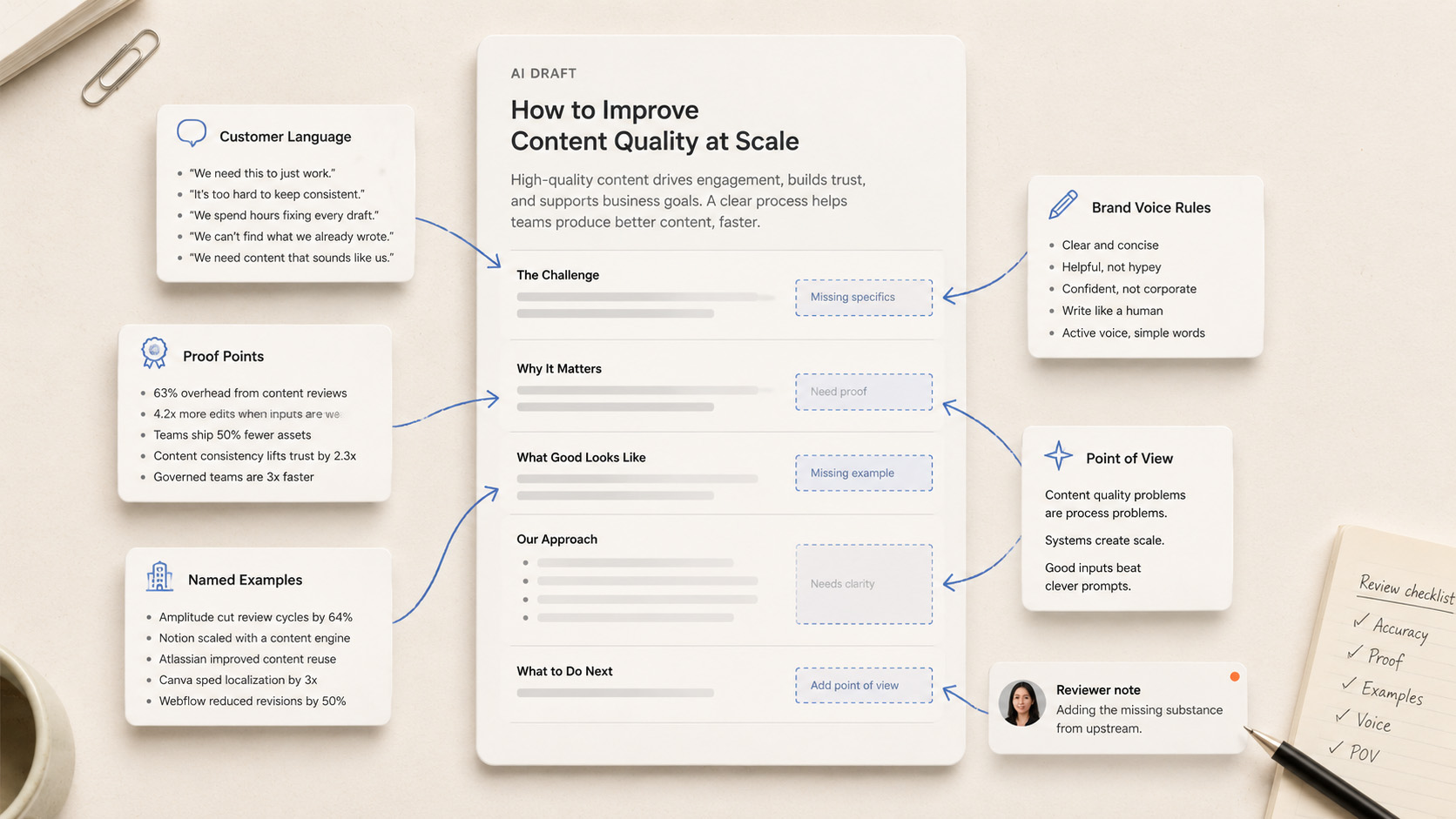
Building a brand-safe AI content workflow isn't about finding a smarter model. It's about combining three things: clear patterns that make content sound human, a consistent review system that catches robotic output before it goes live, and a repeatable process your whole team can follow.
That's exactly what the Pragmatic Content Engine is built to do. It gives you the frameworks, review standards, and activation plan to turn these principles into a consistent workflow, so better output isn't dependent on one person's instincts or a perfectly crafted prompt every time.
If you want to start small, begin with the checklist. If you want the full system behind it, the Content Engine gives you everything in one place.
Susan Westwater is the CEO and Co-Founder of Pragmatic Digital. She helps mid-market and PE-backed teams move from scattered AI pilots to governed, measurable workflows that actually deliver operating leverage. With 25+ years in CX and brand leadership at Leo Burnett and Ricoh USA, Susan specializes in turning AI ambition into repeatable systems that protect brand voice and reduce revision cycles. She is co-author of Voice Strategy and Voice Marketing.

Weekly insights on AI adoption, workflow, and what's actually working in mid-market organizations.